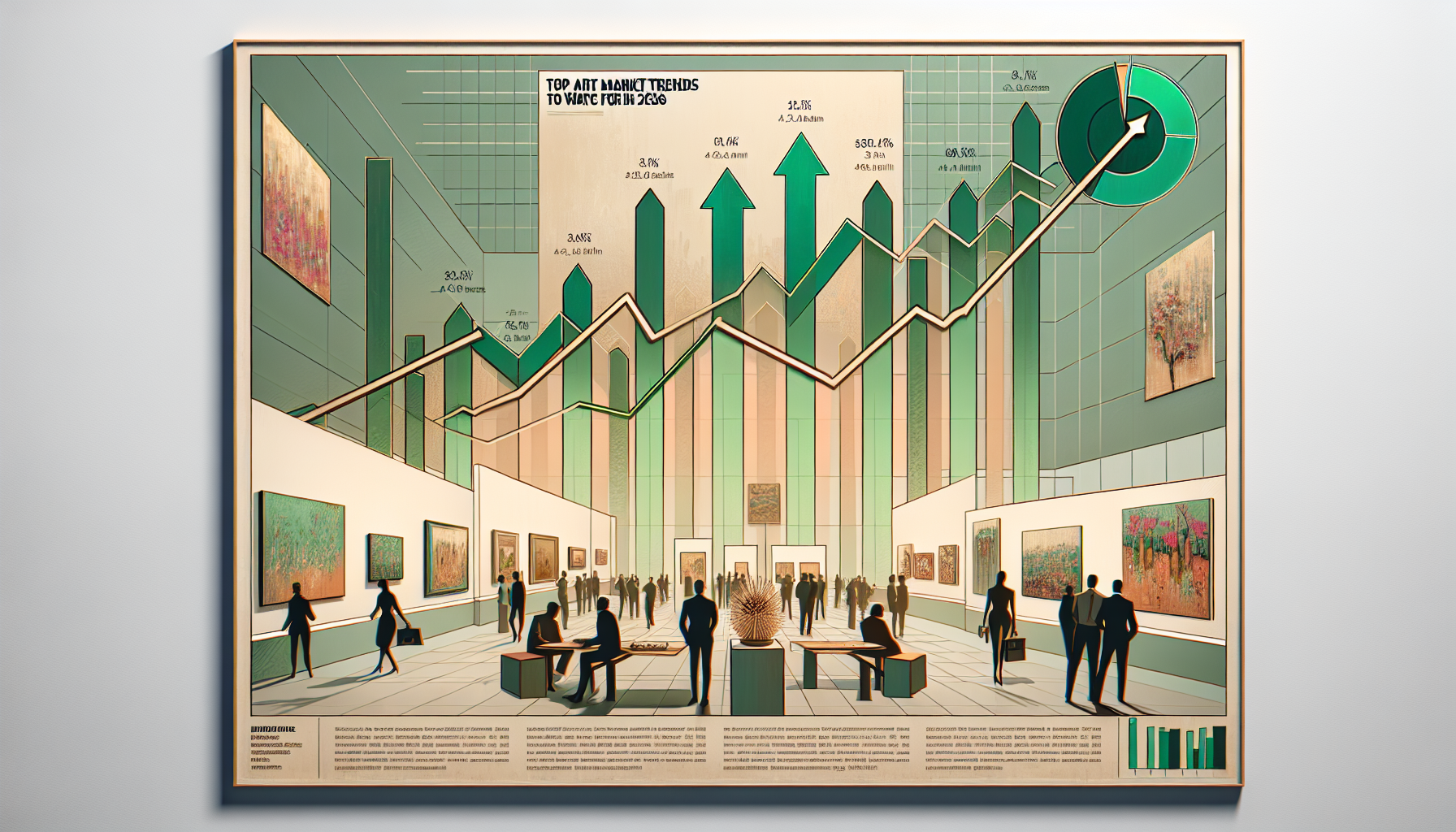
As we approach 2026, the art market appears to be on the cusp of recovery after a challenging 2025. Key indicators, like promising sales figures from Miami and significant auction events in New York totaling $2.2 billion, suggest a cautiously optimistic outlook for the coming year. Here’s a closer look at some pivotal trends shaping the art market in 2026.
1. Uneven Market Recovery
The art market is showing signs of resilience, partly due to potential lower interest rates and diminishing geopolitical tensions. However, the recovery isn’t uniform. Some segments are rebounding while others lag, reflecting a K-shaped recovery seen in various industries, including luxury goods. At Art Basel Paris, secondary-market demand increased, even as contemporary works experienced a decline in interest. This trend is highlighted by the formation of Pace Di Donna Schrader Galleries, a new venture focused on secondary market works, indicating an eagerness to capitalize on the upward K-curve. As we move further into 2026, the art market is expected to split into distinct sectors, with certain segments continuing to struggle. This may lead to more galleries downsizing or closing, shifts in leadership within art firms, and potential mergers and acquisitions.
2. The Gulf’s Cultural Ascendancy
The Gulf region is becoming a focal point for the art world in 2026, with major events such as Art Basel in Qatar, the 20th anniversary of Art Dubai, and Frieze’s inaugural event in Abu Dhabi. Alongside these are the third Diriyah Contemporary Art Biennale in Saudi Arabia and the long-awaited opening of the Guggenheim Abu Dhabi. These developments highlight the region’s growing cultural infrastructure and its burgeoning commercial art market. The UAE’s recent private equity boom has injected substantial wealth into the region, positioning Abu Dhabi as a rising global financial hub, supported by favorable business regulations and strategic geographical advantages. Distinguishing themselves will be critical for these art fairs as they strive to leverage their unique strengths. Art Dubai, with its two decades of regional experience, has bolstered its team with key hires. Frieze partners with Abu Dhabi Art, aiming to elevate the fair’s stature, while Art Basel capitalizes on Doha’s sophisticated tourism infrastructure.
3. Reviving Interest in Digital and Prehistoric Art
The digital art scene is experiencing a resurgence reminiscent of 2021, with significant interest generated at Art Basel Miami Beach by the OpenSea-supported Zero 10 sector. While digital art is gaining traction, maintaining the tech community’s engagement remains a challenge. Simultaneously, fossil sales are making a comeback, as evidenced by Sotheby’s $30.5 million sale of a Ceratosaurus and a Triceratops fossil fetching $5.4 million at Phillips. These two seemingly disparate categories attract a similar demographic: younger professionals under 45 within the science and tech sectors. According to Kenny Schacter, this new wave of buyers is marked by a competitive pursuit of prestige, driven by tech magnates and certain Middle Eastern royal families. The influx of younger, diverse buyers is crucial for the art market’s vitality in 2026.
In Conclusion
While the art market is showing signs of recovery, the path forward remains uneven. Stakeholders should prepare for a year of both opportunities and challenges as they navigate this evolving landscape.