Revolutionary 3D Model Reveals Secrets of Easter Island Statues’ Craftsmanship
A groundbreaking 3D model has unveiled new insights into the carving of Easter Island’s iconic statues. This remote island, the easternmost in Polynesia, poses significant challenges for researchers due to its isolated location, requiring a six-hour flight to the nearest airport. Accessing Rono Raraku, the quarry responsible for 95% of the island’s moai statues, involves climbing a steep volcanic slope. The situation worsened in 2022 when a wildfire ravaged the area, prompting concerns about the site’s preservation. In response, an indigenous community group enlisted Binghamton University researchers to document Rono Raraku permanently.
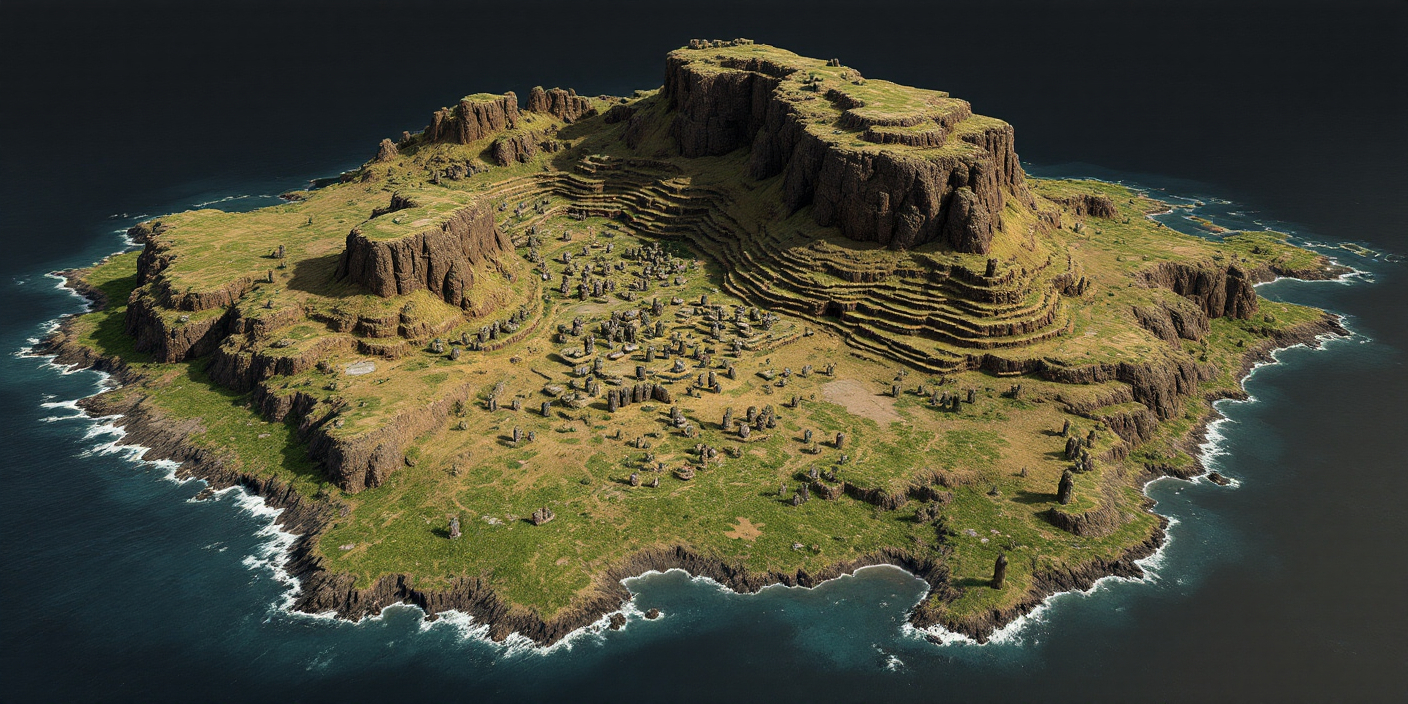
Over six months, Binghamton’s team conducted numerous drone flights over the quarry, capturing over 11,000 overlapping images. These were combined via photogrammetry to create a detailed 3D model now available online. Carl Lipo, a leading Easter Island scholar, described this model as an “archaeological Disneyland.” The 3D map provides a vivid context for understanding how the island, comparable in size to Brooklyn, has withstood the vast Pacific Ocean’s forces. The map allows closer inspection of the arduous task of sculpting and extracting massive stones from the volcano’s side.
Between the 13th and 17th centuries, more than 900 moai were carved from Rono Raraku. The map uses color-coding to narrate this history. Blue outlines denote areas where moai were removed, termed rectangular quarried voids. These 133 areas range from the base to the peak of the slope. Red-marked trenches show where rock sections were accessed and extracted, while yellow marks denote works in progress—over 400 moai, from barely discernible noses to fully realized statues on the valley floor.
This 3D model is instrumental in exploring how these monumental sculptures were crafted and what this process reveals about Rapa Nui society. The island’s life was organized into decentralized clans, evident in distinct residential clusters and ceremonial centers scattered across the landscape. In Rono Raraku, researchers identified 30 unique quarrying zones where groups of four to six clan members executed the entire crafting process. The diverse methods used highlight the clans’ autonomy.
Each clan adopted different techniques for carving moai: some carved sideways into cliffs starting with the upper body and face details; others utilized a “Block Method,” first outlining the moai’s rectangular form before detailing its features, while the most popular approach involved detailing the head before carving the body. This cultural sharing and varied artistic expression illustrate a communal yet individualistic society. The research challenges the notion that large-scale constructions necessitate hierarchical political systems. As published in PLOS One on November 26, the findings suggest an effective sociopolitical framework that coordinated monumental projects without concentrating power and risking resource overuse.
Though it was understood that Rapa Nui operated non-hierarchically, this research strengthens that perspective, complementing a growing body of scholarship reshaping our understanding of the island. Prior studies have dispelled the myth of Easter Island’s complete isolation between its initial settlement and European arrival in 1722. Evidence indicates the island was visited at least twice in the 14th century by Polynesian travelers and had pre-European contact with South Americans, as shown by the presence of sweet potatoes.
More recently, Lipo and his team have addressed another mystery: how the moai were transported. Experiments indicate the Rapa Nui likely “walked” the statues into place by rocking them side to side with ropes. To validate this theory, Lipo’s team successfully moved a replica moai 300 feet in 40 minutes.