Monumental Buddha Installation to Illuminate New York’s High Line, Celebrating Cultural Heritage
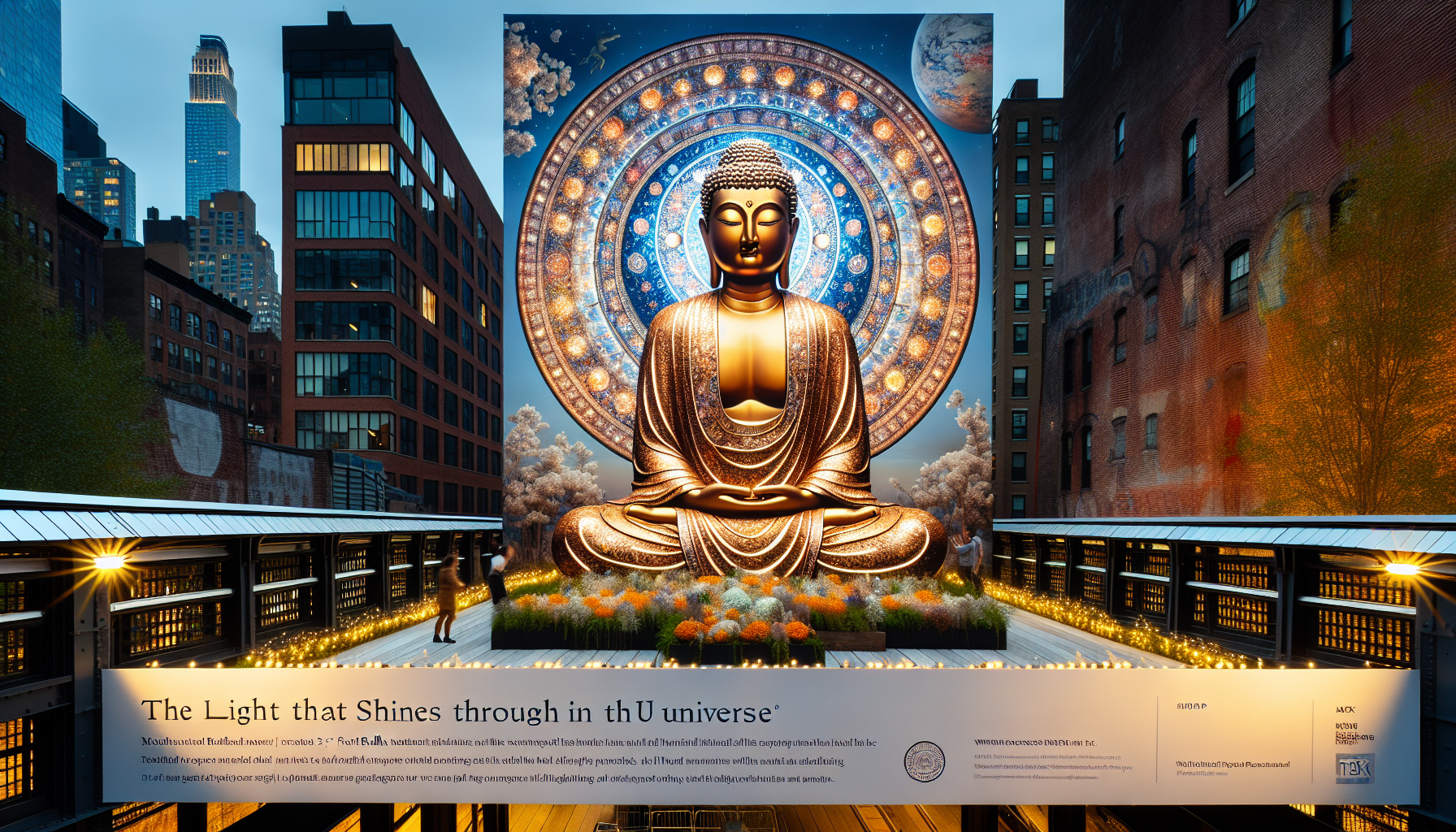
In a remarkable showcase of art and cultural remembrance, a towering 27-foot Buddha crafted by Vietnamese American artist Tuan Andrew Nguyen will grace New York’s High Line for 18 months starting next spring. Titled “The Light That Shines Through the Universe,” this High Line Plinth commission serves as a poignant tribute to a lost piece of cultural heritage.
Artist Nguyen, recognized for exploring themes of violence, loss, and redemption, will present a sculpture that reflects on the Bamiyan Buddhas’ destruction in Afghanistan in March 2001. These monumental 6th-century statues, which stood at 120 and 175 feet, were obliterated by the Taliban despite international outcry, symbolizing a tragic erasure of pre-Islamic history and cultural diversity along the Silk Road.
As remembered by Cecilia Alemani, director and chief curator of High Line Art, the destruction marked a significant moment of helplessness. Nguyen’s reinterpretation, prominently positioned on 10th Avenue, offers a new vision. Unlike the original cliff-carved Buddhas, Nguyen’s freestanding rendition includes an invented back side, leaving space for personal interpretation. The hands, lost in previous iconoclastic acts, will be uniquely crafted from melted brass artillery shells and scrap metal sourced from Afghanistan, forming mudra poses that signify fearlessness and compassion.
Nguyen’s sculpture, fabricated in Vietnam from four giant sandstone parts supported by a steel core, will be the tallest piece commissioned for the High Line Plinth. Its journey to New York will begin with shipping in January, and its assembly, conducted at night, will take less than a week.
Alan van Capelle, executive director of Friends of the High Line, emphasized the sculpture’s role as a “27-foot call to remembrance,” underscoring its significance in a world where cultural erasure remains a pressing issue. The installation will serve as a powerful site for connection and resilience, advocating for creative reinterpretation and honoring cultural losses while engaging contemporary imagination.
Nguyen’s art, which often addresses the aftermath of war and colonialism, employs artillery shells as a frequent material, transforming them into new artistic creations. His recent work, “Temple,” showcased at the National Gallery Singapore’s roof garden, exemplifies this transformation with its therapeutic chimes and healing ambiance.
Beyond its monumental presence, Nguyen’s High Line commission sparks dialogue about the potential for repair and healing after significant cultural destruction. Accompanied by meditation and wellness programming, this installation prompts reflection on the role and reimagining of monuments today, celebrating peace, hope, and resilience.
Nguyen’s work stands not just as a revival of a historic object but as an emblem of enduring hope and new beginnings, as noted by curator Alemani.