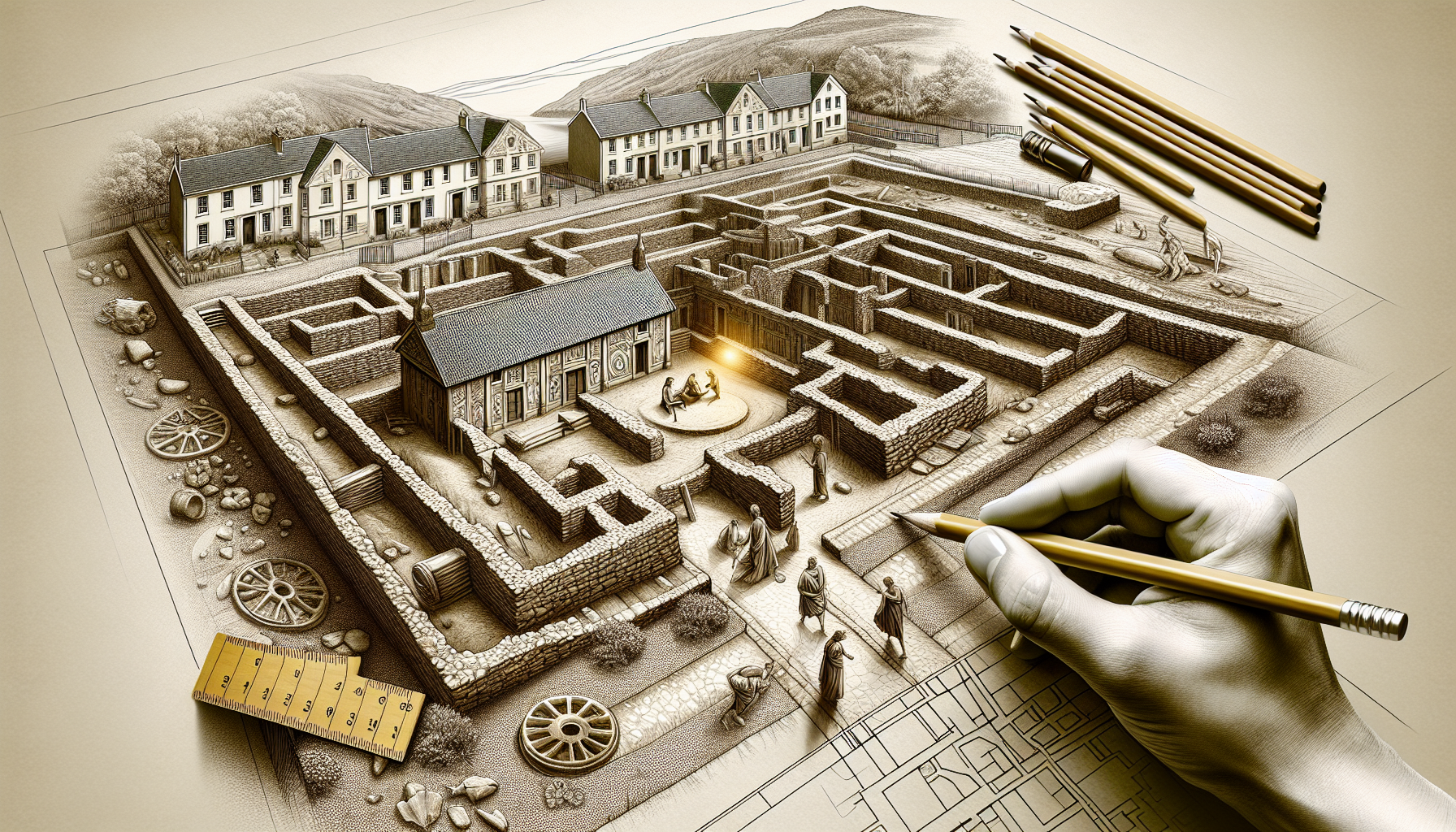
In a groundbreaking archaeological find, experts have unearthed what may be the largest Roman villa ever discovered in Wales, hinting at the potential for a significant historical site akin to ‘Pompeii’. Nestled beneath three feet of soil in a historic park in Port Talbot’s Margam neighborhood, this discovery was made during geophysical surveys by ArchaeoMargam—a joint initiative between Swansea University, Neath Port Talbot Council, and Margam Abbey Church.
The research team, equipped with advanced ground-penetrating radar, identified the remarkably preserved footprint of a Roman complex, a discovery unprecedented in the region. Alex Langlands from Swansea University, leading the project, expressed amazement at the find, stating, “We anticipated uncovering artifacts from the Romano-British era, yet this level of preservation exceeded our expectations.”
The villa spans 6,156 square feet and includes six primary rooms at the front, with two corridors leading to eight additional rooms at the rear. Enclosed within a walled area measuring approximately 141 by 180 feet—believed to be remnants of an Iron Age fortification—there is also an aisled structure to the southeast, possibly serving as a storage or meeting hall. The precise location remains confidential for now.
Langlands suggested to the BBC that this villa, likely once the residence of a local dignitary, was a bustling hub within a substantial agricultural estate. While it’s early to determine the building’s age, architectural details, or the reasons for its abandonment, the data from the geophysical survey sets the stage for hypotheses about Margam’s role in socio-economic developments during the first millennium in Wales.
The Margam site, known for its array of prehistoric artifacts from Bronze Age burial mounds to Iron Age hillforts, also holds inscribed stone monuments from Early Christianity in the 6th century, preserved at the Margam Stones Museum. Additionally, the 12th-century abbey remains reflect a Celtic monastic heritage. However, evidence of Roman presence since 48 C.E. has been limited, apart from a milestone inscribed with Roman Emperor Postumus’s name, housed at the National Museum of Wales in Cardiff.
This Roman villa discovery fills a significant gap, with Langlands humorously labeling the site as “Port Talbot’s Pompeii” in his BBC interview. He speculated that the villa could be surrounded by other contemporary structures, including trading centers, Roman roads, and possibly a bathhouse, indicating a broader network of Roman settlements in the area.
Min Chen Culture Editor