Researchers Date Enigmatic Cave Art in Texas, Unlocking Mesoamerican Origins
Researchers have managed to date the mysterious cave paintings in Texas, shedding light on their significance in Mesoamerican history. Carolyn Boyd, a researcher from Texas State University, has analyzed the artwork sequence of a Pecos River style figure at the Fate Bell Shelter in Seminole Canyon State Park and Historic Site. This breakthrough was shared by Vittoria Benzine on December 2, 2025.
Approximately 12,500 years ago, cave-dwelling hunter-gatherers inhabited the Lower Pecos Canyonlands, near the Rio Grande, at the border of Mexico and West Texas. These early inhabitants left behind numerous artifacts, including arrowheads, earth ovens, and extensive murals—some of which span 500 feet in length and 50 feet in height. Despite the visual impact of these paintings, experts faced challenges in dating them due to the non-carbon-based mineral pigments used.
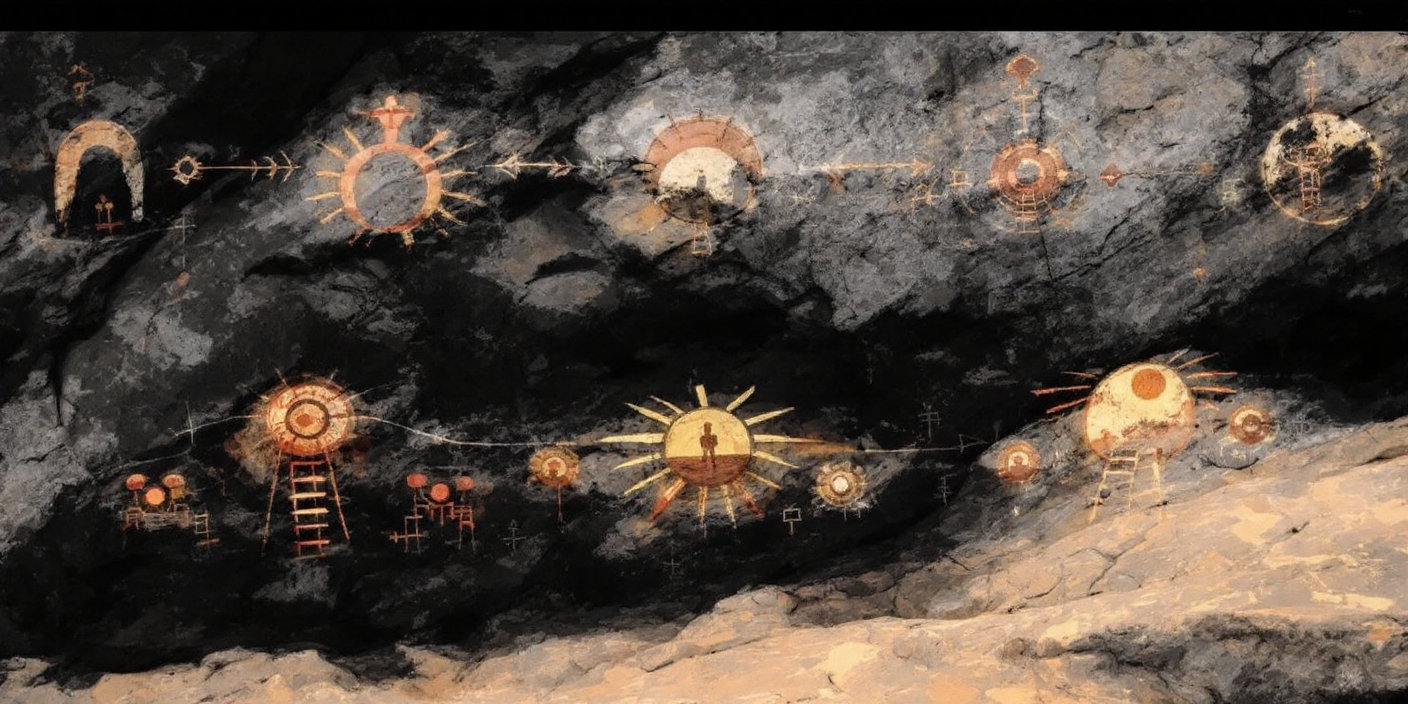
A trio of Texas researchers has tackled this challenge by applying a unique blend of technologies to 53 figures found across 12 Lower Pecos Canyonlands sites. Their findings are published in Science Advances. Initially, the team studied the recurring motifs in the murals, identifying that 134 sites feature designs such as “crenelated arches,” “rabbit-eared headdresses,” “stylized dart tips,” and “speech breath.” They then performed stratigraphic analyses on eight sites displaying the “power bundles” motif and conducted radiocarbon dating on four additional sites.
Rather than dating the pigments directly, the researchers dated deer bone marrow that ancient artists used as a paint binder. This approach, using plasma oxidation, allowed for maximum carbon extraction while avoiding harsh preparation methods. Importantly, control samples were taken to ensure no organic contamination in the rock surface, as explained by Karen Steelman from the Shumla Archaeological Research and Education Center.
Previously, anthropologists believed these dense murals resulted from individual contributions over millennia. However, radiocarbon dating revealed that the dates for each artwork were closely clustered, suggesting they were created during singular painting events, according to Carolyn Boyd.
The team also dated organic layers beneath and above the paintings to verify these results. These studies showed that the Lower Pecos cave paintings were created over four millennia—from 5,760 to 5,385 years ago, ending between 1,370 and 1,035 years ago. Despite various technological and ecological changes during this period, the paintings remained consistent in style and iconography.
Prehistoric artists consistently painted from dark to light colors, using black, red, yellow, and white, which parallels later Indigenous creation myths where black symbolizes the void, red the sun, yellow dawn, and white noon. Boyd also noted the arch motif, symbolizing a sacred mountain with a sun-climbing ladder, as explained by Huichol elders.
These groundbreaking discoveries support Mexican historian A. López Austin’s 1997 theory of a foundational “hard core” shared by all Mesoamerican cultures.